

|
 |

Metallography
The BethStar 50 combination of microalloying and thermomechanical processing typically produces ferrite/pearlite microstructures with a fine ferritic grain size ranging from ASTM 10 to 12. A fine-grained duplex grain size, elongated ferrite grains, warm-worked ferrite, and occasional bainite/martensite patches may also be observed. The grain refinement results from the interaction between alloying and low-finish temperature control rolled processing. The columbium microalloying inhibits austenite recrystallization, and below a critical temperature, the rolling deformation becomes cumulative. As a result, a pancaked austenite grain morphology is obtained during rolling, which produces a very fine ferrite grain size after transformation. The microstructures shown in Figures 6 are representative of 3/8 in. (6A), 1 in. (6B) and 2 in. (6C) BethStar 50 plates. A fine, uniform ferrite grain size is the key to improved strength, toughness and formability for BethStar plate.
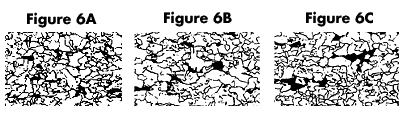
Representative microstructures of BethStar 50 plates at an original
magnification of 200 X.
| Welding Suggestions BethStar 50 is readily weldable, and normally will require no preheat for temperatures above 0�F, provided low-hydrogen conditions can be maintained. When base metal temperature is below 32�F, the plate should be preheated to remove any moisture. Consumables: Procedural Testing: |
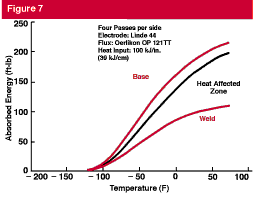 Transverse Charpy impact data for base metal and HAZ of a submerged arc welded 1 1/4 in. (32 mm) BethSatr 50 plate.
|
Burns Harbor  Burns Harbor Products
BethStar Steel Plate |
Home  Financial About Divisions Steel Links Products Markets What's New
E-mail comments to: [email protected]
�1998, Bethlehem Steel Corporation