Glossary
BASE BOX � A unit of area equivalent to 31,360 sq. in. (217.78 sq. ft.)
BASE WEIGHT - A designation number indicating a nominal thickness
BLACK PLATE � A low carbon cold reduced steel intended for use in the uncoated state or for coating with tin for tinplate products.
BOX ANNEALING (BA) � This process involves slow heating and cooling of coils from a subcritical temperature, to soften and relieve stresses produced during cold reduction. It is accomplished in an air tight box and a relatively bright surface is maintained introducing an inert or slightly reducing gas during the cycle.
BRIGHT FINISH � A melted electrolytic tin coating which has a lustrous appearance.
BUNDLE � A unit containing two or more packages. A unit is considered standard if consisting of 10, 12, or 15 packages (package considered standard if consisting of 112 sheets per package.)
COATING WEIGHT � A term referring to the desired amount of tin per base box of plate.
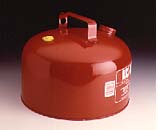 CONTINUOUS ANNEALING (CA) � This process consists of passing the cold reduced strip continuously and in a single thickness through a series of vertical passes within a furnace consisting of heating, soaking, and cooling zones. An inert or slightly reducing gas is maintained in the furnace to obtain a relative bright strip.
DIFFERENTIALLY COATED TINPLATE � Electrolytic tinplate with a different weight of in coating on each side. Normally line marked on the heavy coated side.
DOUBLE REDUCED (2CR) � A product which is given a partial cold reduction then annealed and given another cold reduction to the final thickness. The resulting product is stiffer, harder and stronger than a single reduced product and offers economies, in many instances, to users by enabling them to use lighter base weights.
DRAWN AND IRONED (D&I) � Process for making two-piece cans in which a circular blank is drawn through a die to form a cup and then thinned to final dimensions by being forced through a series of two or three progressively smaller diameter �ironing� rings.
DRAW-REDRAW (DRD) � Process for making two-piece cans in which a circular blank is drawn through a die to form a shallow cup and then redrawn through a second or third die to produce a can of desired dimensions.
ELECTROLYTIC CHROMIUM COATED STEEL (ECCS) � A low carbon steel, single or double reduced black plate having a thin coating of chromium/chromium oxide applied electrolytically.
ELECTROLYTIC TIN-COATED SHEET (ETCS) � Cold rolled sheets 0.0150 in. and thicker, which have been processed through an electrolytic tinning operation and on which tin coatings of various weights are deposited.
ELECTROLYTIC TINPLATE � Cold rolled low carbon steel of 0.0149 in. thickness or lighter on which tin has been electro-deposited.
K-PLATE � Electrolytic tinplate, NO. 50 or heavier tin coating, with improved corrosion performance for some galvanic detinning food products.
MATTE FINISH � An unmelted tin coating which has a dull appearance.
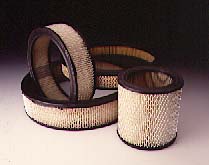 MELTED FINISH � A bright or fused finish.
PACKAGE � A unit of 112 sheets.
PICKLING � A process of removing iron oxide from hot rolled bands by immersion in an acid solution prior to cold reduction.
ROLLING WIDTH � The dimension of the sheet perpendicular to the rolling direction of the steel strip.
STEEL TYPE D � An aluminum killed base metal steel sometimes required to minimize severe fluting and stretcher strains or for severe drawing applications, or where special directional properties are required.
STEEL TYPE L � Base metal steel, low in metalloids and residual element. Sometimes used for improved internal corrosion resistance for certain food product containers.
STEEL TYPE MR � Base metal steel similar in metalloid content to Type L, but less restrictive in residual elements, commonly used for most tinplate applications.
TEMPER � An arbitrary number designation to indicate the forming properties of tin mill products.
TIN COATING WEIGHT � The amount of tin per base box of plate, e.g., No. 25 equivalent to 0.25 pound per base box.
UNIT � A carton of a specified number of packages, or a specified maximum unit weight.



