|

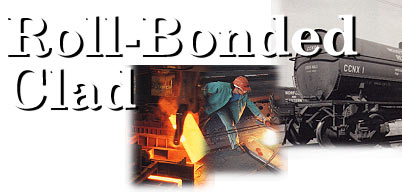
How Clad Plate is Made |
||
| 1. Attached by temporary lugs to an electrical buss bar, the cladding inserts are immersed in a nickel solution and electrolytically plated to promote bonding. | ||
| 2. A "parting compound" is then applied to one side of each insert. The parting compound allows for separation of the bonded clad plates at this interface after processing. | ||
| 3. The cladding inserts, with the parting compound between them, are placed facing each other. | ||
| 4. The two cladding inserts are placed onto one of the steel backing slabs. | ||
| 5. Steel spacer bars are placed around the periphery of the backing steel slab. A second backing slab is placed on top, enclosing the cladding insert within the pack, which is then tack welded. | ||
| 6. Automatic submerged arc welding seals the pack and completes the assembly process. | ||
| 7. Clad assemblies of various sizes are staged for transport to the rolling mill complex. | ||
| 8. The pack is lifted from the soaking pits after being reheated to rolling temperature... | ||
| 9. ...and rolled on the 140-inch or 206-inch wide rolling mill where a force of up to 10 million pounds is exerted on the pack. During rolling, the surfaces of the two metals are metallurgically bonded over their interface. Plates are heated treated when required to restore corrosion resistance of the cladding and/or mechanical properties of the backing. | ||
| 10. The seal weld and any edge discard of the rolled pack is cut away and the pack opened, yielding two-bonded clad plates. After descaling and picking, each plate is then cut to desired final dimensions. | ||
| For other roll-bonded clad applications, BLP can use a 2-, 3-, or 5-ply manufacturing process, which are not detailed in this brochure. | ||

Bethlehem Lukens Plate Products
If you have any questions or comments, please Contact Us
�1999, Bethlehem Steel Corporation