Plate Length Availability
The range of  thickness for plate grade is an integral part of its specification. The available width and length of a plate of a plate grade are determined by the individual producer - not the specifications. Each steel plate producer has individual limitations for width and length for a given thickness. Bethlehem rolls plates to order from slabs weighing not less than 5000 pounds. Each slab is rolled into a plate having a single thickness and width - the only variable is length. Obviously, the thicker the plate, the shorter it must be, depending on the original slab size.

In designing a bridge, the engineer calculates the flange plate sizes required at numerous points within a span. A decision must then be made whether it will be more cost effective to change the flange sizes and make a butt splice, or just continue the heavier plate. To better make this decision, the engineer needs to be aware of the maximum length of plate that is available for a given thickness.

Before proceeding, it is advisable to discuss how fabricators manufacture girder flanges.
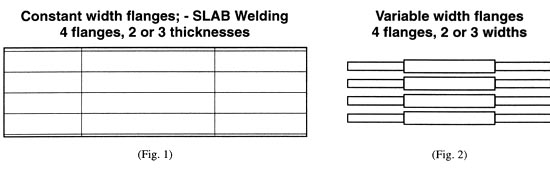
chart_slab.jpg (17439 bytes)

dot_clear.gif (46 bytes)


For a given field section, the fabricator will order plates in multiples of the flange width, generally aiming for a total width of 72" to 120" for economy in ordering. (Fig. 1). He will next make only two butt welds. This can only be done if the design utilizes a constant flange width within a given field section.

The alternative is shown in Fig. 2, where the fabricator must handle and prepare 12 individual plates including burning and tapering, fit-up 4 separate flange assemblies, attach 16 run-off tabs, weld and grind 8 plates, and remove and grind 16 run-off tabs. It is obvious that the method in Fig. 1 is far more economical. The fabricator should always be given the option of eliminating a butt splice and continuing the heavier plate.

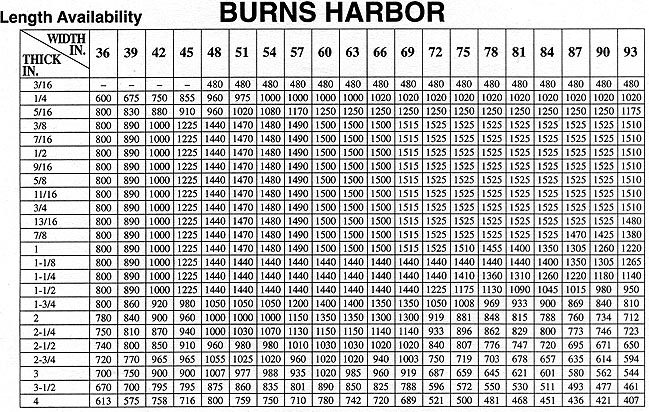
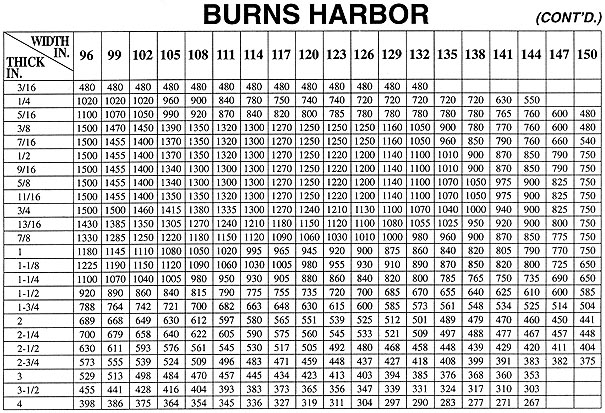
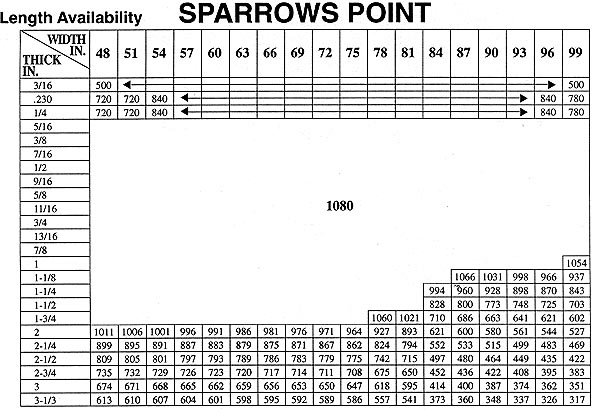
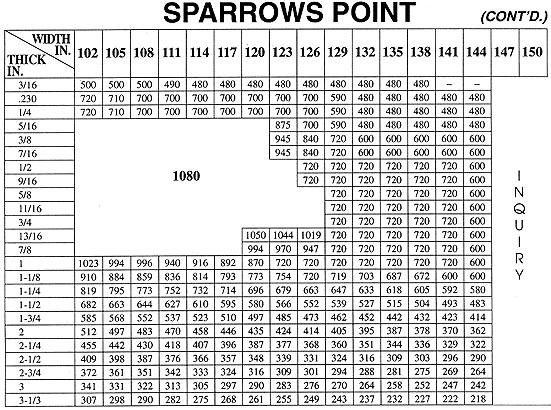
The following tables show available lengths, in inches, for the given plate widths and thicknesses. These tables are for A709 grades 36, 50 and 50W only.


chart_burns1.jpg (140373 bytes)

chart_burn2.jpg (125287 bytes)

chart_sparrow1.jpg (69548 bytes)

chart_sparrow2.jpg (91855 bytes)

dot_clear.gif (46 bytes) dot_clear.gif (46 bytes) Summary:
  • Bethlehem Steel produces plates at two locations: Burns Harbor, Indiana and Sparrows Point, Maryland. Each plant has its own capabilities and limitations, thus the need for two different tables for available lengths.
  • The tables are for A709 Grades 36, 50 and 50W only.
  • Grades 70W, 100 and 100W need to be Quenched and Tempered, and thus have different length limits; for those designs where these grades are needed, contact Bethlehem for length availability.
  • Plate delivery lead times traditionally run 4-6 weeks after receipt of the order. This, of course, can vary depending on a number of factors. For more specific lead times, contact your Bethlehem representative.


Bridges Bridges Technical Bulletins


Home Financial About Divisions Steel Links Products Markets What's New

E-mail comments to: [email protected]
�1998, Bethlehem Steel Corporation